














Chinese President Xi Jinping arrived in Pyongyang on Monday to an elaborate state welcome, signaling a renewed commitment to strengthening ties between China and North Korea as the
two countries seek closer strategic coordination amid shifting regional dynamics.
In remarks published by North Korea’s ruling Workers’ Party newspaper, Rodong Sinmun, ahead of his arrival, Xi described bilateral relations as standing at a “new historical starting point” and pledged to deepen cooperation across political, economic, and cultural sectors.
“China’s unwavering policy is to develop relations with North Korea,” Xi wrote, adding that both countries would expand exchanges and work together to safeguard regional stability. He also criticized efforts that threaten peace and security, calling for opposition to “hegemony, authoritarianism, and attempts to revive militarism.”
Xi’s visit, his first trip abroad this year and his first to North Korea in seven years, underscores Beijing’s efforts to reinforce its influence with its long-time ally. The two-day summit comes as Pyongyang strengthens trade and military cooperation with Russia, providing leader Kim Jong Un with greater diplomatic leverage.
North Korean leader Kim Jong Un and First Lady Ri Sol Ju personally welcomed Xi and his wife, Peng Liyuan, at the airport. State media footage showed a red-carpet reception, an honor guard, and children presenting bouquets of flowers. A military band performed the national anthems of both countries during a ceremony at Kim Il Sung Square, while a 21-gun salute marked the occasion.
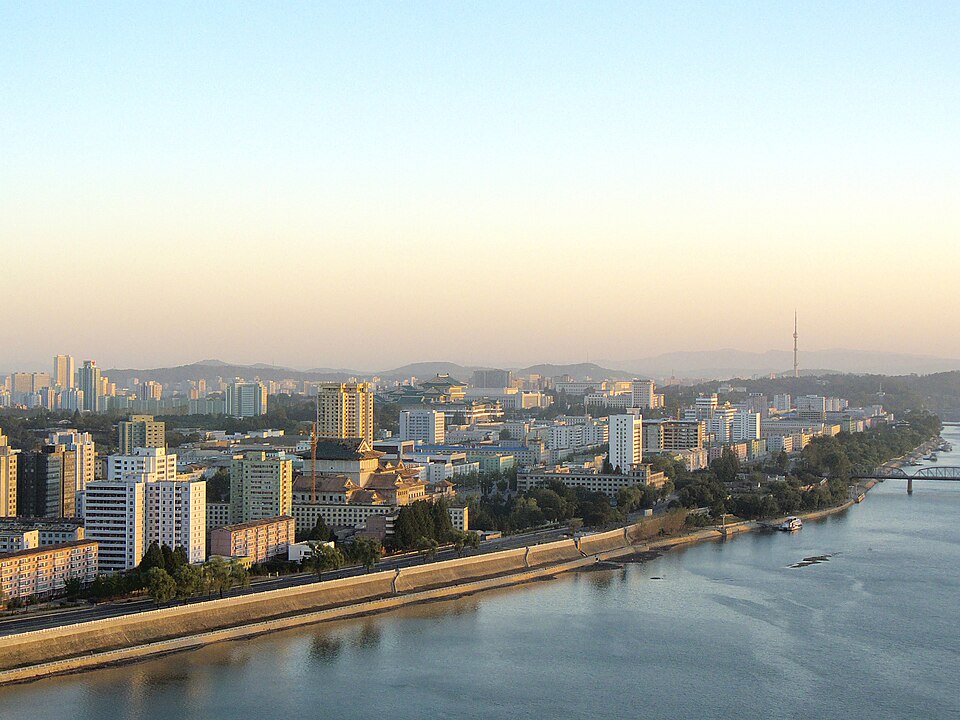
The capital was decorated with Chinese and North Korean flags along major avenues, reflecting the significance Pyongyang attached to the visit. Xi was accompanied by senior Chinese officials, including Foreign Minister Wang Yi and top Communist Party aide Cai Qi.
Analysts view the summit as a reminder of North Korea’s continued strategic value to Beijing. Craig Singleton, a senior fellow at the Foundation for Defense of Democracies, said the meeting demonstrates that China still regards North Korea as an important geopolitical asset amid broader competition with the United States and its allies.
Xi is expected to hold extensive talks with Kim on regional security, economic cooperation, and international affairs. In his published remarks, the Chinese president emphasized support for multilateral cooperation and inclusive economic globalization, describing long-term peace and stability as a shared goal of both nations.
The summit also takes place against a backdrop of growing diplomatic activity between Pyongyang and its neighbors. Cross-border exchanges with China have expanded since pandemic restrictions were lifted, and direct flights between Beijing and Pyongyang resumed earlier this year.
On the eve of Xi’s arrival, North Korea highlighted its military ambitions by unveiling plans for a 10,000-ton naval destroyer and reaffirming its status as a nuclear-armed state. Recent assessments by the Stockholm International Peace Research Institute estimate that North Korea possesses around 60 nuclear warheads and continues to increase production of fissile material, potentially enabling further expansion of its arsenal.
Observers say the strengthening relationships between North Korea, China, and Russia could further complicate efforts by Washington and Seoul to bring Pyongyang back to the negotiating table. Photo by Kok Leng Yeo from Singapore, Singapore, Wikimedia commons.