













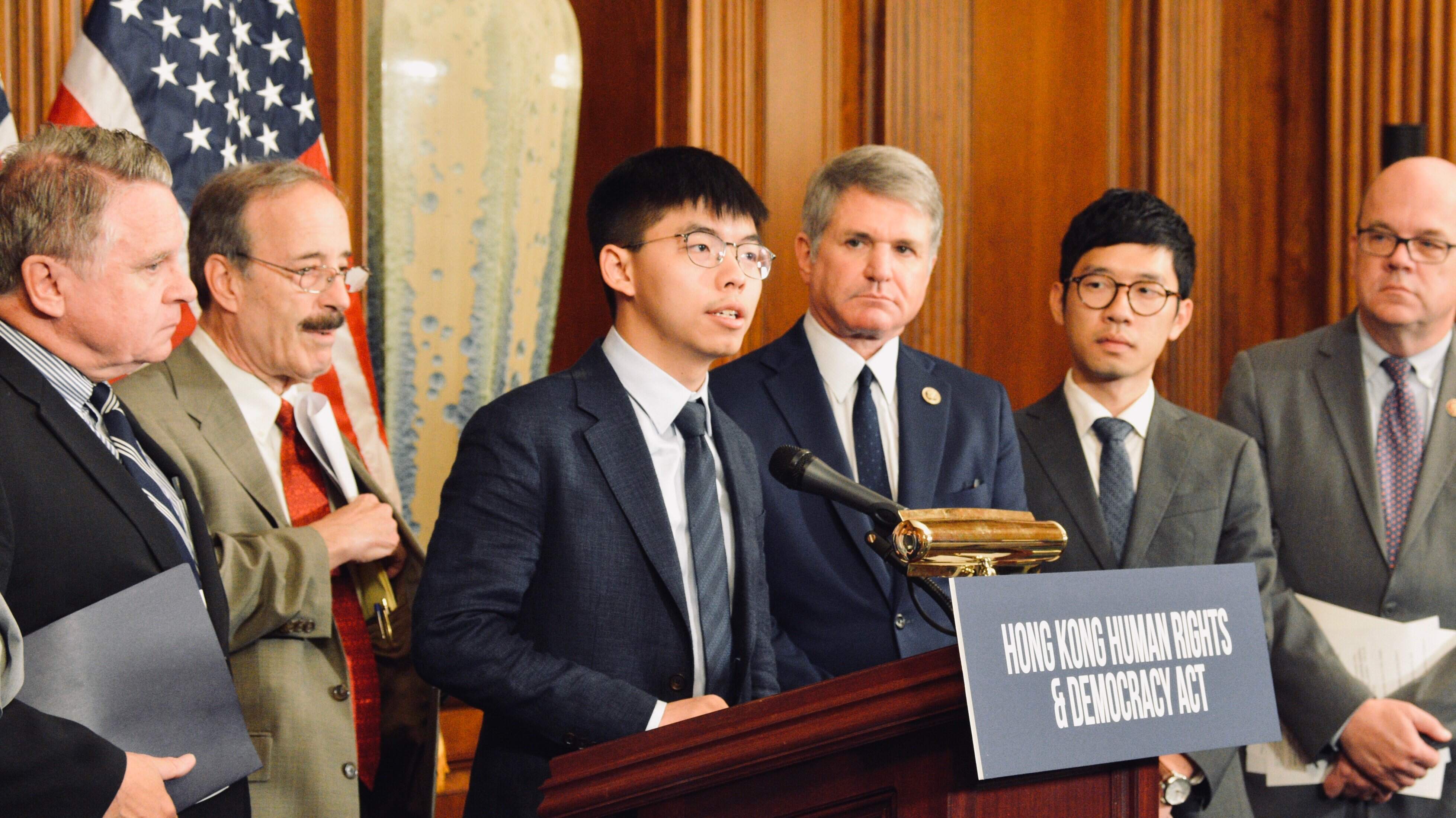
The case of Hong Kong democracy activist Joshua Wong remains one of the most contentious and widely debated issues in the city's political life. His latest prison sentence has once again
brought questions surrounding Hong Kong's national security legislation, the future of the pro-democracy movement and the role of foreign governments in the city's affairs to the forefront of international discussion.
The controversy intensified after Wong, 30, was sentenced to an additional 10 years in prison on Thursday on charges of colluding with foreign entities under Hong Kong's national security law. The activist, who has been behind bars since 2020, was among the prominent figures associated with the pro-democracy protests that swept through Hong Kong in 2019.
The latest ruling has triggered renewed criticism from foreign governments and human rights advocates, while Hong Kong authorities have strongly defended the judicial process. The dispute has also revived discussion about the extent to which international actors should be involved in matters concerning Hong Kong's political system and the treatment of its opposition figures.
The court proceedings have become a focal point in the broader international dispute over the interpretation and implementation of Hong Kong's national security legislation. According to the prosecution, Wong and his associates, including exiled activist Nathan Law, sought to persuade foreign governments and organisations to impose sanctions, blockades and other measures against China and Hong Kong. The authorities argued that these activities continued after the national security law came into force in 2020. Wong pleaded guilty to the charge in September 2026. The court described the offence as particularly serious and imposed the statutory minimum sentence for an offence classified as grave.
The international response was swift. On November 6, the foreign ministries of ten countries, including the United States, the United Kingdom, Germany, France, Canada, Australia, Italy, Japan, the Netherlands and New Zealand, issued a joint statement condemning the sentence. They argued that the national security law was being used to target individuals for political expression and participation, and called for an end to what they described as unjust prosecutions. The European Union also criticised the ruling, calling for Wong's immediate release and expressing concern about the deterioration of the rule of law and political pluralism in Hong Kong.
However, Hong Kong's Legislative Council has taken a sharply different position. On Saturday, November 7, lawmakers issued a statement condemning foreign governments' criticism of the ruling. They described the international reactions as attempts to discredit Hong Kong's judicial system, undermine its national security legislation and misrepresent criminal activities as legitimate political expression.
A Legislative Council spokesperson further characterised the criticism as political manipulation intended to confuse the Hong Kong public and mislead the international community. The spokesperson maintained that Hong Kong had restored stability and prosperity and continued to perform strongly in international business and competitiveness rankings.
The Hong Kong government has likewise defended the court's decision, insisting that the proceedings were fair and open and that protecting national security is a constitutional responsibility. Security Secretary Tang Ping-keung also accused foreign governments of interfering in Hong Kong's internal affairs and argued that the sentence reflected the seriousness of the offences established by the court.
At the heart of the controversy lies a fundamental disagreement over the boundaries between national security, political activism and international engagement. While Beijing and Hong Kong authorities maintain that foreign interference and attempts to impose sanctions threaten the city's stability and sovereignty, Western governments argue that the prosecution raises serious questions about the protection of political freedoms and the commitments established under the 1984 Sino-British Joint Declaration.
Wong's case is therefore unlikely to remain simply a legal matter. His additional prison sentence, which could significantly extend his detention beyond the release date previously expected in early 2027, has become a symbol of the wider confrontation between Hong Kong's national security framework and international demands for the protection of civil and political rights.
As a result, the debate over Joshua Wong is once again placing Hong Kong at the centre of international attention. The competing positions of local lawmakers, Chinese authorities and foreign governments demonstrate that his case continues to have implications extending far beyond one individual's future, touching on the city's political identity, its relationship with Beijing and its standing in the international community. Photo by House Foreign Affairs Committee, Wikimedia commons.